Offscript
Player-made games
Context
Many popular party games suffer from limited replayability because their content is static and quickly exhausted.
Offscript began as a hobby project to develop a game built with player-generated content that adapts to different group dynamics, where replayability is constrained only by the imagination of the players.
Strategy
Offscript was designed around a set of product and experience principles: fast setup and simple explanation, adaptable gameplay for different group dynamics, strong social interaction, and high replayability.
The development strategy:
- Define – Identify a target niche and develop a user avatar to guide messaging, game mechanics, and content design.
- Validate – Conduct extensive in-person playtests across different groups to refine gameplay, social dynamics, and rule mechanics.
- Deliver – Self-publish the game, leveraging crowdfunding, game manufacturers, and fulfillment partners.
The commercial approach prioritises a direct-to-consumer model, capturing higher margins and control over the user experience. Retail remains a potential secondary channel for scale.
Product
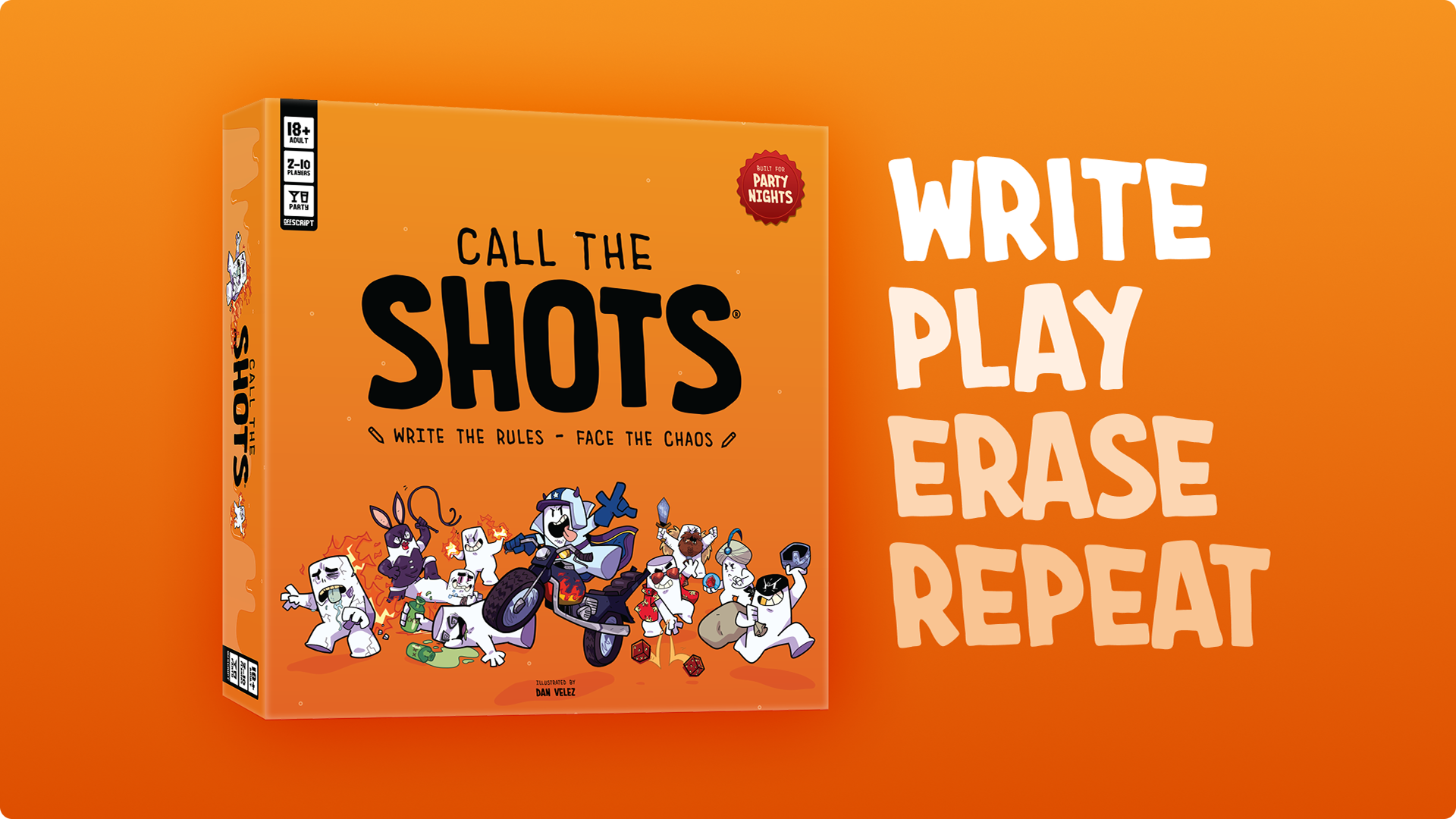
The game combines a physical tabletop card game with a companion app.
Physical game
I designed and created all branding, components, rules, developing the physical product experience end-to-end. Notably, UX-led design resulted in an innovative wet erase pen, enabling players to write rules on cards, shuffle them into the deck, and erase them at end of each round.
The design evolved through multiple iterations, informed by playtesting, improving clarity, engagement, and usability at each stage.
Companion app
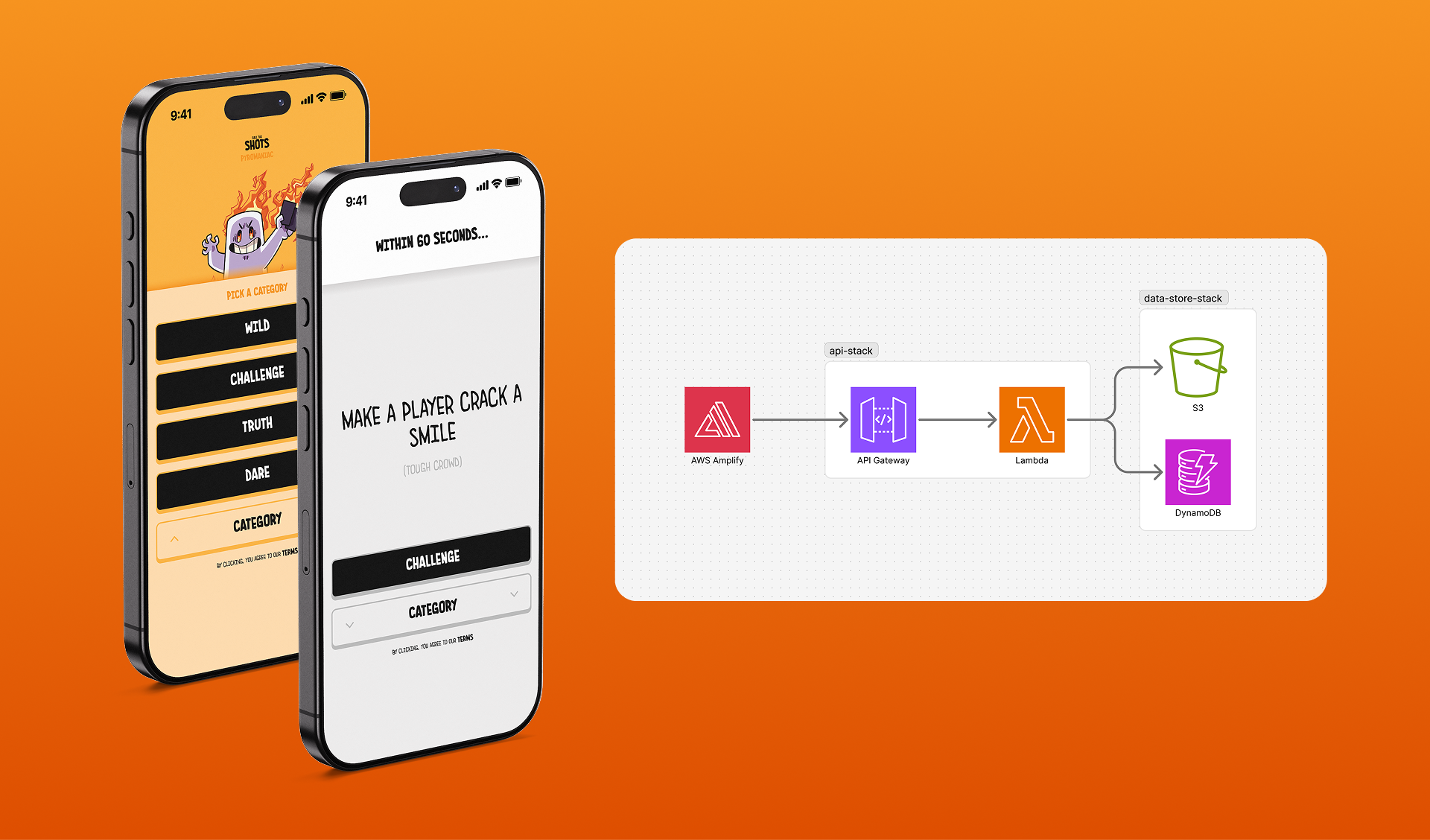
User testing revealed a consistent friction point: some players struggled to come up with ideas when writing prompts. I built a lightweight web app that generates suggestions, keeping players engaged and the game flowing.
The app uses a low-cost serverless architecture designed to support user growth and feature expansion.
Go-to-Market
Physical games require upfront investment due to manufacturing minimum order quantities. To minimise risk, a capital-efficient go-to-market strategy was employed to validate demand before committing to production.
- Validate – Test messaging and audience demand using paid advertising and a pre-launch campaign. I developed and tested creatives, headlines, and messaging to measure audience interest through cost-per-lead performance.
- Launch – Run a Kickstarter campaign supported by paid advertising. Pre-launch followers and validated acquisition metrics provided confidence the campaign could reach funding targets while maintaining profitable customer acquisition.
- Scale – Use Kickstarter proceeds to fund manufacturing and fulfilment, while building a direct-to-consumer sales channel for ongoing revenue and brand development. B2C growth is supported through affiliate incentives such as TikTok Shop and Amazon Associates, encouraging creators to produce user-generated content in exchange for commission on sales.
Outcomes
Manufacturing-ready product
Product design approved for production, with prototypes developed and signed off with the manufacturing partner.
Strong unit economics
Secured a manufacturing partner delivering ~8× cost-to-retail margin, providing headroom for marketing, distribution, and promotional pricing while maintaining profitability.
The project is currently in pre-launch progressing toward Kickstarter launch.
Lessons
Simplicity wins
The strongest player engagement came from focusing on the core mechanic and removing non-essential complexity. Simpler games are easier to learn, faster to start, and far easier to communicate in marketing.
Test in the real world
In-person testing surfaced behaviours and edge cases that would never appear in surveys or digital prototypes. Observing real player interactions proved essential for refining the product experience.