Greenmind
Optimise building energy use
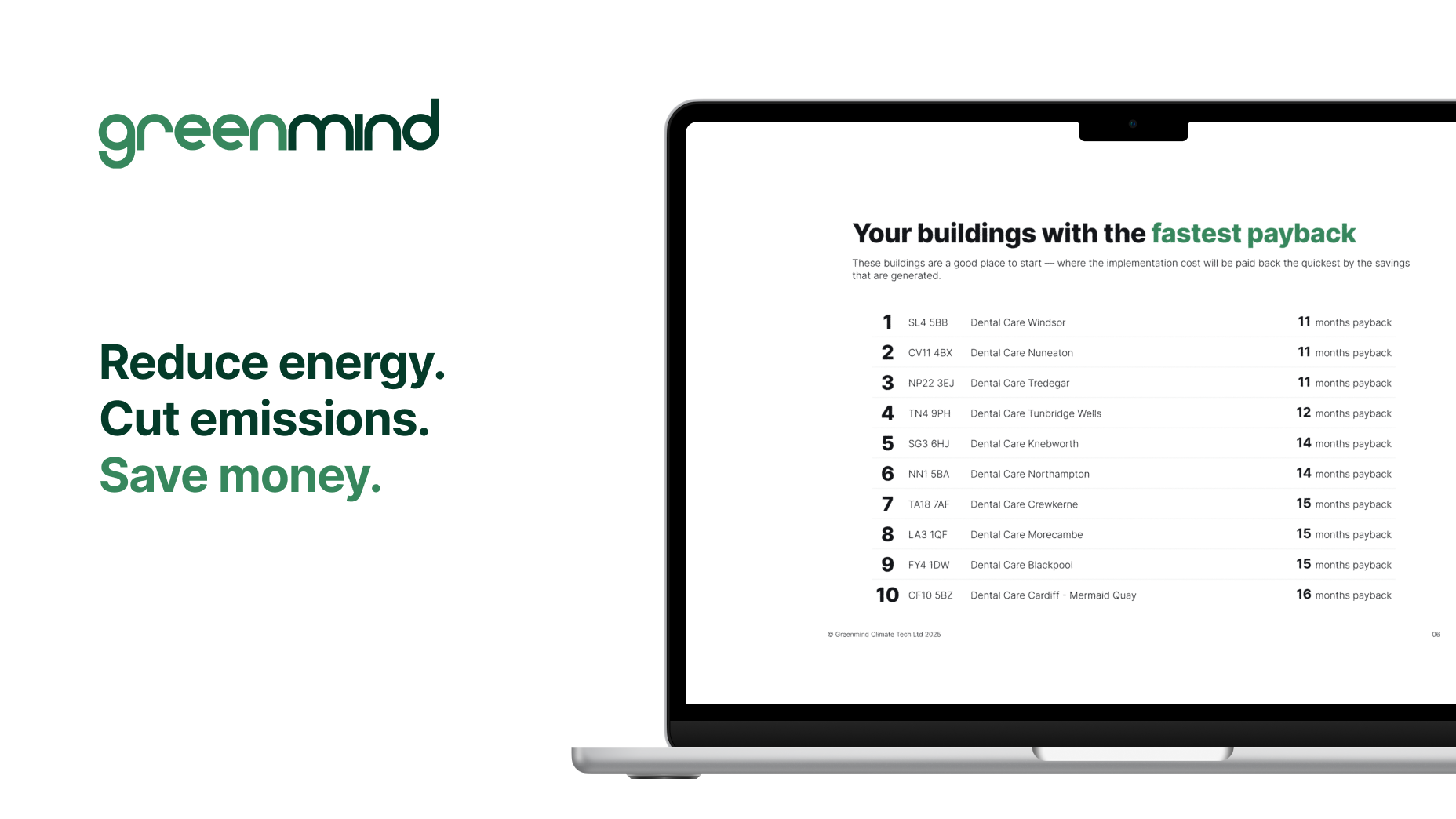
Context
Many organisations can materially reduce operating costs simply by improving how their buildings are operated.
Greenmind explores how data-led optimisation could identify and unlock energy savings across fragmented portfolios — with no upfront capital, short payback periods, and minimal operation disruption.
Strategy
I developed a data-led strategy to identify buildings where optimisation measures would deliver the fastest payback — targeting high cost per unit energy and high energy waste risk.
The three-stage lifecycle:
- Appraise - Automated portfolio analysis and identification of top savings targets.
- Digitise - Scanning of buildings and assets validate savings potential.
- Optimise - Targeted savings interventions with real-time environment and energy tracking.
Building data compounds value over time, improving targeting, savings projections and optimisation measures across future buildings.
To scale efficiently, Greenmind was designed around a partner-led operating model. Installation contractors provided the physical deployment capability, allowing Greenmind to focus on software, data, and optimisation intelligence. Financing partners reduced upfront cost barriers by allowing savings to fund system repayments.
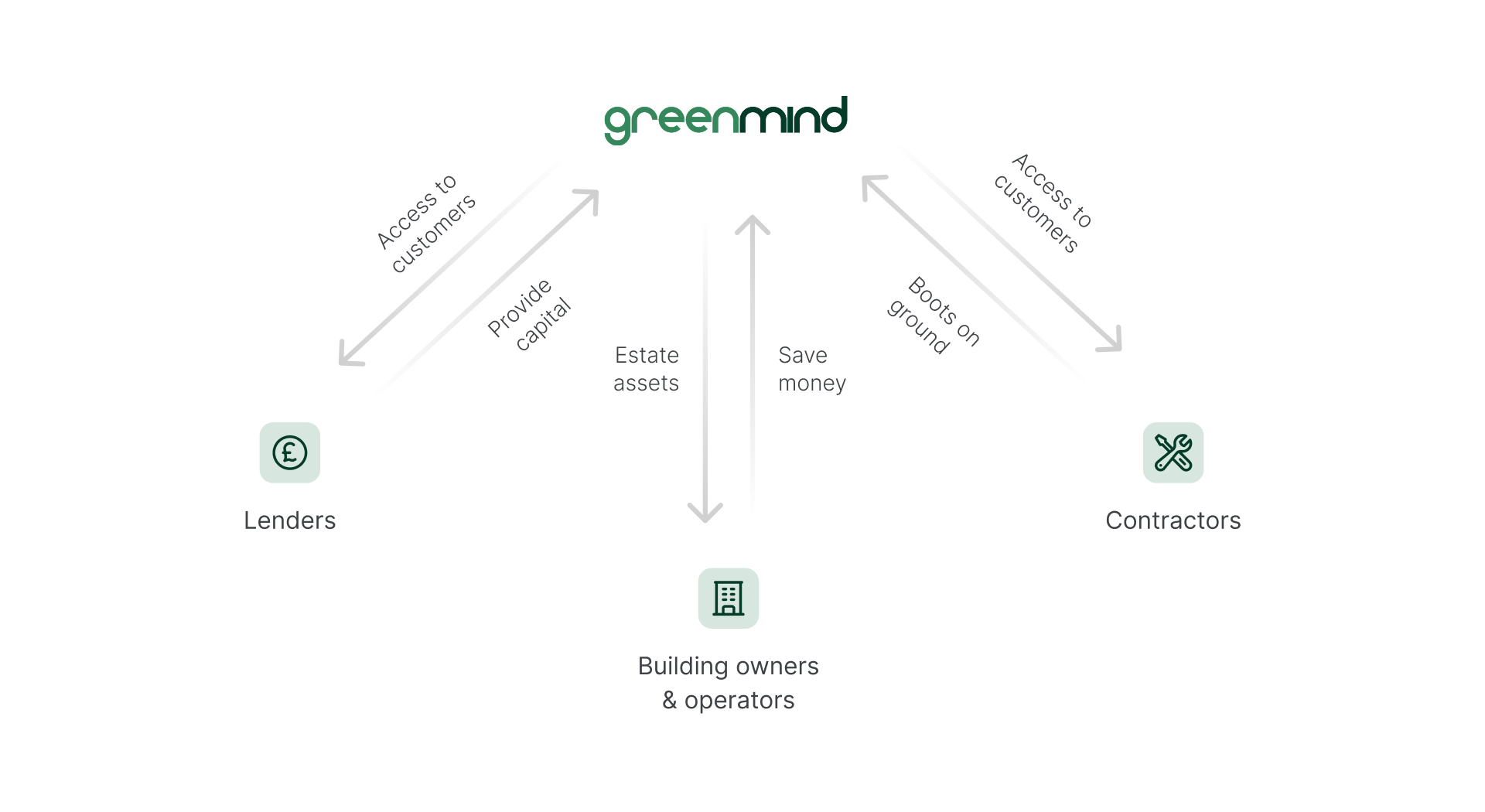
The result was a scalable subscription and marketplace model combining software revenue with partner-delivered installation and maintenance.
Technology
The Greenmind platform combined edge systems deployed within buildings with cloud infrastructure for data processing, analysis, and reporting. I designed and built the initial architecture to validate optimisation approaches and support early pilots.
Proof-of-concept
I developed an initial proof-of-concept to validate building digitisation and optimisation with minimal time and budget, leveraging LoRaWAN, Node-RED, Datacake, Matterport, SendGrid, and Notion.
Report pipeline
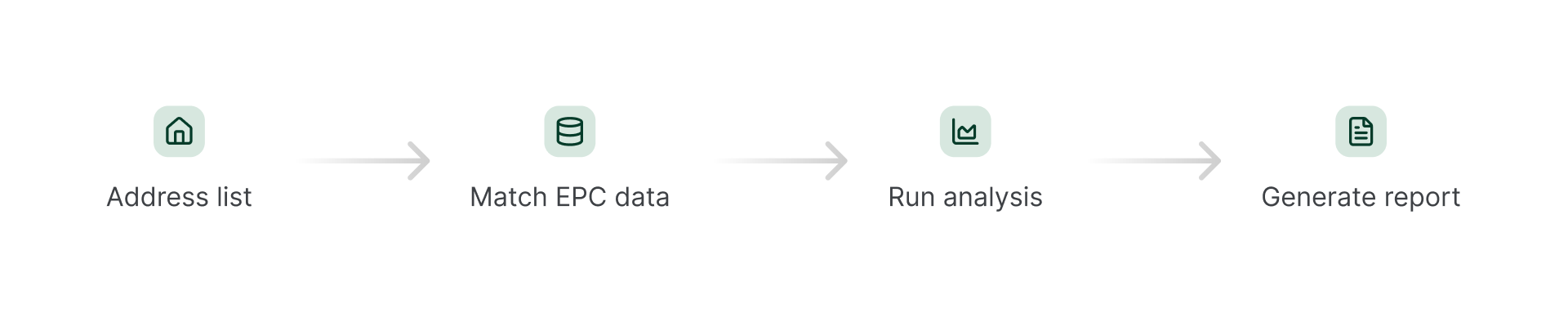
I built an automated building analysis pipeline, used to collect data for a cohort of buildings, analyse optimisation and payback potential, outline top targets, and generate a customer-ready PDF report within minutes.
Edge system
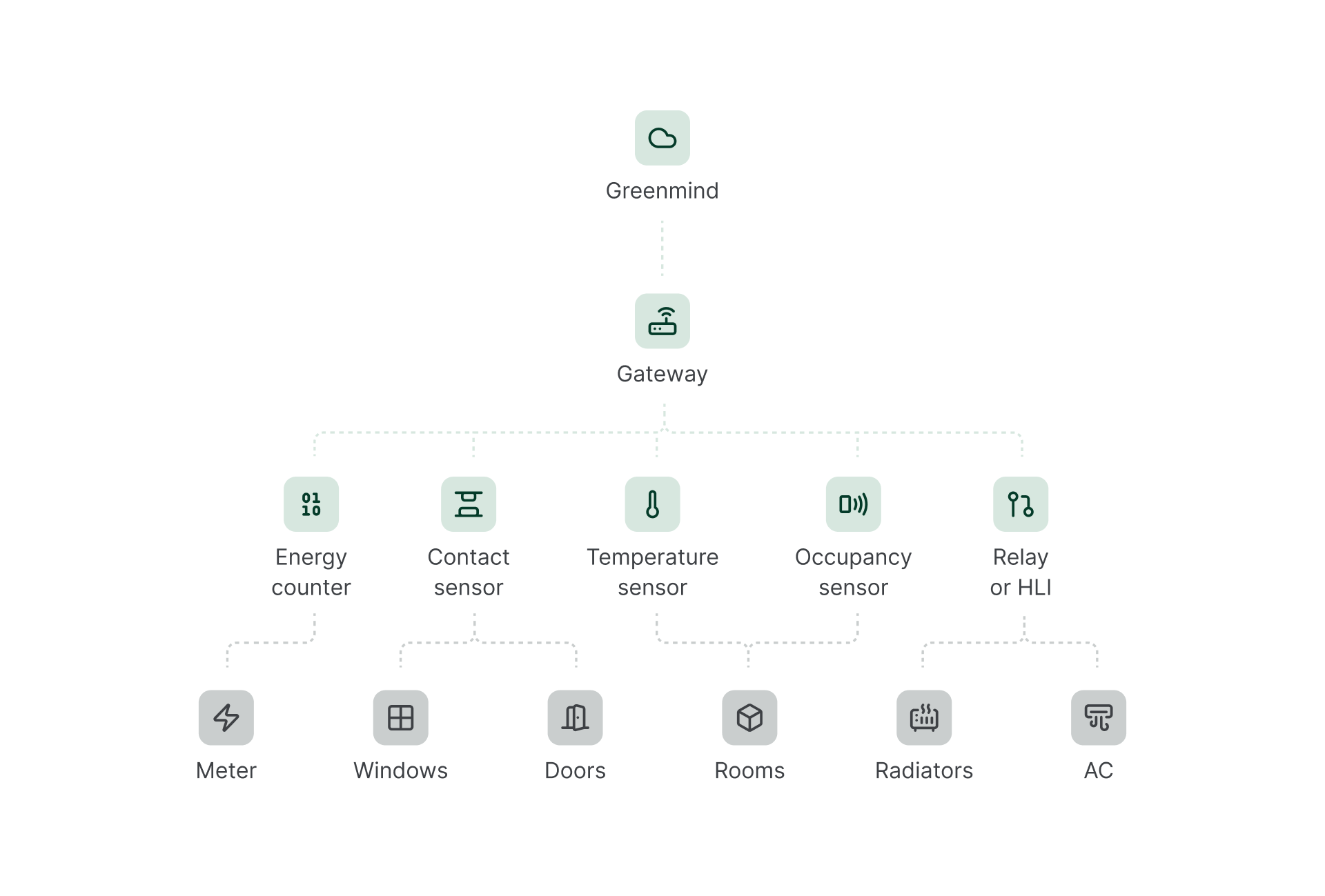
I designed an edge system that reduces avoidable energy consumption within buildings. LoRaWAN was selected for the building sensor network due to its long-range wireless capability, open standard, and isolation from customer IT infrastructure.
A gateway running a LoRaWAN Network Server hosted the edge application responsible for monitoring and control. This architecture ensured buildings remained operational even during internet outages. External communication was handled via cellular connectivity, avoiding dependence on the building’s internal network.
Data pipeline
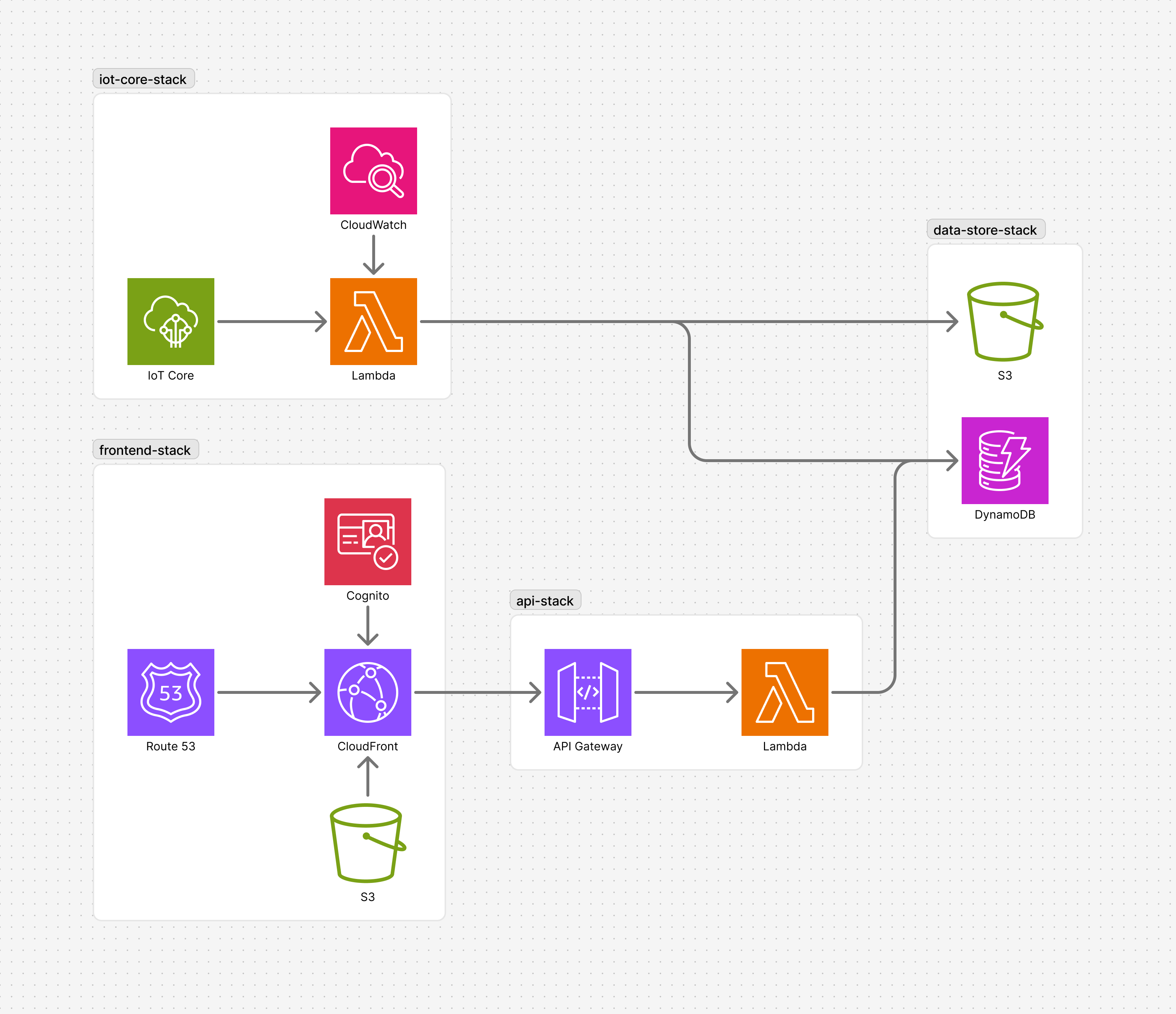
I designed a cloud data pipeline to ingest telemetry from edge systems alongside building context data. The system handled device registration, LoRaWAN profiles, packet decoding, and multi-tenant data storage.
The architecture followed a serverless design to support scalable ingestion and future analytics and reporting workloads.
Go-to-Market
Greenmind target mid-to-large portfolio owners and operators, where a single relationship could scale across many buildings.
The commercial model followed a three-stage progression designed to reduce adoption friction and demonstrate measurable value before scaling.
-
Engage - Appraise a customer’s estate, generating portfolio-level insights highlighting saving opportunities. This analysis created immediate value and opened conversations with decision-makers responsible for energy performance and operating costs.
-
Prove - Digitise and Optimise a small number of priority buildings to validate real-world savings and operational impact.
-
Expand - Once savings were proven, expand deployment across the wider portfolio, creating a natural land-and-expand growth model.
Outcomes
Enterprise pilot secured
Landed a pilot with a global organisation, validating the value proposition within a complex, multi-stakeholder environment.
Energy savings proven
Demonstrated 20% annualised energy reduction through targeted optimisation measures.
Funding dependent on traction
Scaling the platform required investment to transition from proof-of-concept tooling to a production-grade platform. Investor conversations were positive, though most required stronger evidence of customer traction before committing capital.
Lessons
Enterprise adoption friction
Large enterprises require alignment across multiple stakeholders before adopting new technologies or operational changes. Even with a clear ROI, organisational friction can delay implementation. Adoption pathways must therefore be designed alongside the technical solution.
Validation precedes persuasion
Investor interest followed clear problem articulation, but capital required evidence of real customer demand. Earlier and faster customer validation cycles would have reduced risk and strengthened the investment case.
Customer concentration risk
Focusing heavily on a single large pilot reduced opportunities to test the model across different customer types. Broader early-stage experimentation would have accelerated market learning.
Founder alignment
In early-stage ventures, leadership alignment and shared long-term focus are critical. Commitment levels, ownership expectations, and decision rights should be clearly defined from the outset.